How To Evaluate Rental Potential In Snowmass Village Condos
May 7, 2026
May 7, 2026
If you are looking at a Snowmass Village condo as both a mountain getaway and a revenue property, one question matters fast: will the numbers actually work in this building? In Snowmass, rental potential is shaped by much more than a pretty pro forma or a market-average screenshot. You need to understand seasonality, building rules, management structure, and town compliance costs before you can judge whether a condo is a strong fit for your goals. Let’s dive in.
Snowmass Village has a condo-heavy rental market. According to AirROI’s 2026 Snowmass Village report, apartment and condo properties make up 89.8% of active rentals, and 1- and 2-bedroom listings account for 68.7% of the active market.
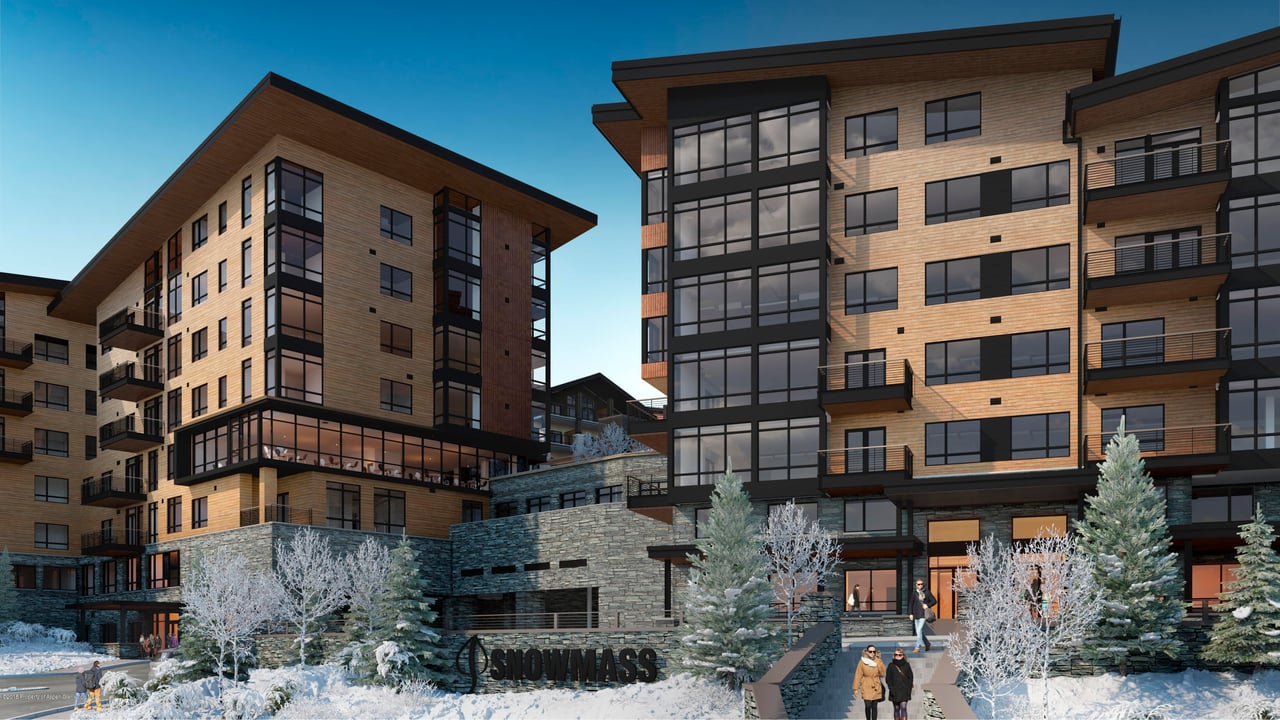
That matters because the local inventory is built around resort-style condo and residence products. Official Snowmass lodging pages highlight properties such as Laurelwood, Interlude, Timberline, and Viceroy, with features like full kitchens, fireplaces, shuttles, parking, ski storage, pools, and hot tubs.
In other words, guests are not just booking a unit. They are booking a building experience, an access point to the mountain, and a level of service. That is why condo rental potential in Snowmass should be evaluated building by building, not just by zip code.
One of the biggest mistakes buyers make is relying on a single market data source. In Snowmass Village, public snapshots vary quite a bit depending on the platform and timeframe.
AirDNA reports 1,279 properties at about 51% occupancy and roughly $1.2K average daily rate. AirROI shows 636 active listings, 35.5% occupancy, and a $712 ADR. Rabbu shows 349 active listings, 66% occupancy, and a $981 ADR.
Those differences are not a small detail. They are a reminder that broad averages are directional, not definitive. When you evaluate a condo, address-level or building-level underwriting is much more useful than plugging one market average into a spreadsheet.
Before you move forward, compare the property against nearby and in-building competitors on these points:
In Snowmass, a condo with similar square footage can perform very differently depending on how the building operates.
Snowmass is a strongly seasonal market, and your underwriting should reflect that from day one. AirROI identifies February, January, and December as the peak months, with peak-season revenue averaging $13,500 per month and daily rates around $1,137.
The softest months are May, October, and November, with average monthly revenue around $3,639 and ADR near $567. Rabbu also shows a winter peak from December through March, plus a secondary summer bump in July.
This pattern matters for both cash flow and planning your own use. AirROI reports an average booking lead time of 95 days, and February stays average a 144-day lead time, which suggests winter demand often books well in advance.
Seasonality affects more than revenue totals. It also shapes how you should think about owner use, expenses, and expectations.
If your goal is a mix of enjoyment and income, this is where a careful tradeoff analysis becomes essential.
Bigger is not always better when you are judging rental potential. In Snowmass Village, the middle of the size range often offers the best balance between occupancy and nightly rate.
Rabbu’s data shows studios and 1-bedroom units at 74% and 71% occupancy, while 2-bedrooms average 64% occupancy and 3-bedrooms 66%. ADR rises from $897 for 2-bedrooms to $1,362 for 3-bedrooms, and monthly revenue rises from $8,715 to $13,584.
Larger 4- and 5-bedroom properties can generate more gross revenue, but occupancy softens to 47% and 52%. That does not make larger units a poor choice, but it does mean they require more careful underwriting and a clearer understanding of demand.
| Unit type | Occupancy | ADR | Monthly revenue |
|---|---|---|---|
| Studio | 74% | Not provided | Not provided |
| 1-bedroom | 71% | Not provided | Not provided |
| 2-bedroom | 64% | $897 | $8,715 |
| 3-bedroom | 66% | $1,362 | $13,584 |
| 4-bedroom | 47% | Not provided | Not provided |
| 5-bedroom | 52% | Not provided | Not provided |
The takeaway is simple: choose a unit size that fits your target guest profile and your budget, but do not assume that a larger purchase automatically means a better return.
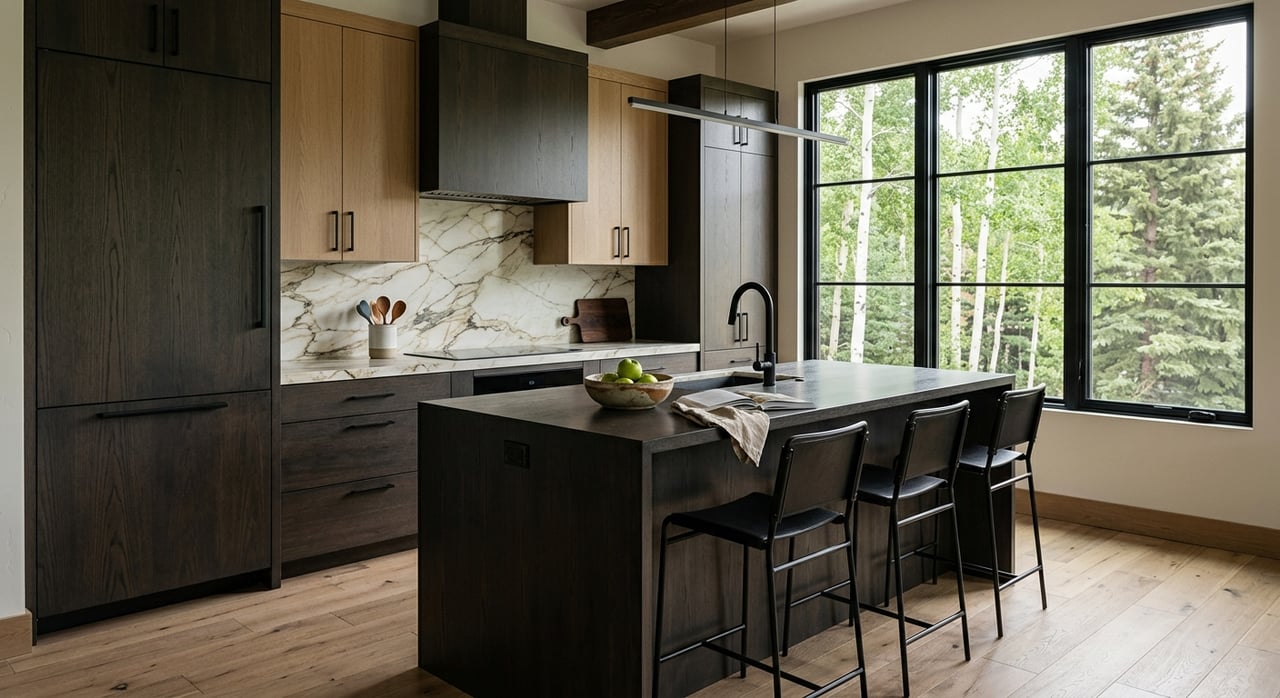
In Snowmass Village, amenities are often part of the baseline rather than a bonus. Rabbu reports that kitchens, parking, hot tubs, and ski-in/ski-out access are common among active listings.
That means your condo may need to meet a fairly high standard just to stay competitive. If a building lacks key conveniences, your projected rate or occupancy may need to be adjusted.
Parking is a good example. Timberline notes that parking is free in summer but costs $18 per day in winter. If your underwriting assumes parking is always included, your numbers may miss a recurring guest or operating cost.
Focus on the features that directly influence booking appeal and guest experience:
These details can have a real impact on both reviews and repeat demand.
Before you get attached to a unit, confirm how the building fits into Snowmass Village’s short-term rental framework. The town defines short-term rentals as stays of fewer than 30 consecutive days, and current regulations were updated effective December 30, 2025.
The town requires a business license and an STR permit for rentals under 30 days. The current permit fee is $400 per unit, the business license fee is $85, and permits renew annually on April 30.
Just as important, Snowmass says HOA approval must be verified, including the number of rental nights allowed, and owners should follow whichever rule is more restrictive. So even if the town allows a use pattern, the HOA may narrow it.
For condo buyers, the building’s structure can shape both rentability and convenience. Snowmass distinguishes between Multi-family A and Multi-family B properties.
Multi-family A applies to condo groups with a centralized check-in facility, property management program, and rental management or unit management program. The town says at least 67% of units should be expected to participate. The town lists Crestwood, Timberline, Stonebridge, and Viceroy as examples.
Multi-family B includes buildings such as Seasons Four and Woodbridge. If a building does not participate in the centralized management program, it falls into Permit Type 3 instead.
For a buyer, that difference can affect guest operations, owner flexibility, and the practical ease of running the condo as a rental.
Management is a major part of rental performance in Snowmass Village. AirDNA identifies CoralTree Residences, Timberline Condominiums, East West Hospitality, iTrip Vacations, and Laurelwood Unit Services among the largest managers in the market.
This is not just a convenience issue. It can influence guest experience, reviews, rate strategy, maintenance response, and owner reporting.
AirDNA also shows that 76% of Snowmass Village listings are cross-posted on both Airbnb and Vrbo. That means channel management and rate consistency are important in this market.
When reviewing a condo, ask for clear answers on:
According to East West’s owner-management materials, services can include housekeeping, maintenance, 24-hour manager-on-call support, guest requests, and accounting plus tax payment support. Services like these can materially affect owner net income and day-to-day ease.
A Snowmass condo may show strong gross revenue potential, but net performance depends on disciplined cost underwriting. The town requires a designated local owner representative who is available 24/7/365 and able to respond within 60 minutes.
Permits are non-transferable, and a new permit is required when ownership changes. The town may inspect a unit with 24-hour notice, and violations can lead to fines or permit loss for issues such as renting without a permit, false information, tax failures, occupancy or parking violations, or failing to list the permit number.
You also need to account for tax remittance. The town says sales and lodging taxes are due monthly by the 20th of the following month, even if there was no rental activity, and Airbnb and VRBO no longer remit taxes on the host’s behalf.
Your underwriting should include more than mortgage and HOA dues. At a minimum, account for:
The town’s Sales & Lodging Tax page lists a 13.05% lodging tax and 10.65% sales tax, while an STR FAQ PDF shows a different combined breakdown. Because those documents do not match exactly, the current town page should be checked before final underwriting or any rate-specific example.
If you plan to use the condo yourself, owner-use restrictions deserve close attention. The practical question is not just whether the unit can rent, but whether it can rent the way you want it to.
For condo buyers, that means understanding how much owner use the HOA allows, whether the building requires participation in a rental program, and whether the town permit category supports the same pattern. A condo can look attractive on paper and still be a poor fit if your preferred use conflicts with building rules.
This is especially important in Snowmass, where many buyers want both personal mountain time and meaningful rental income. The right property is often the one that balances both with the least friction.
Before you make an offer, work through this short list:
In a market like Snowmass Village, this process can save you from overestimating returns or underestimating restrictions.
If you want help evaluating a condo through both a lifestyle and investment lens, Theo Williams brings local Snowmass insight and a concierge approach to finding the right fit.
Stay up to date on the latest real estate trends.
Elevate your real estate experience with Theo Williams. Whether you're buying or selling, Theo's unmatched expertise and personalized service ensure your journey is seamless and rewarding. Contact Theo today to start your real estate adventure.