Old Snowmass Land & Ranch Buying: What to Know
April 23, 2026
April 23, 2026
If you are thinking about buying land or a ranch in Old Snowmass, it helps to know this is not the same as buying a homesite in town. A beautiful parcel may look straightforward at first glance, but what you can actually build or do there often depends on zoning, access, water, septic, and recorded restrictions. With the right due diligence, you can move forward with more clarity and fewer surprises. Let’s dive in.
Old Snowmass should be viewed as rural, unincorporated Pitkin County property, not as a standard in-town lot. Pitkin County’s planning framework for unincorporated land is shaped by long-range and neighborhood planning, and the Snowmass-Capitol Creek / Lower Snowmass Creek master plan emphasizes preserving rural and agricultural character, open pastures, wildlife habitat, and equestrian uses.
That planning context matters because county master plans, while advisory, still strongly influence land-use policy and project review. In practical terms, your plans for a house, barn, access road, or other improvements may be reviewed through a broader lens than you would expect in a more fully serviced neighborhood.
Old Snowmass also comes with practical rural-living considerations. The local valley plan notes that roads can be narrow and winding, with cyclists, pedestrians, livestock, wildlife, and pets often present, which makes year-round access and winter usability important from day one.
Before you focus on views, acreage, or architectural ideas, confirm the parcel’s zoning and allowed uses. Pitkin County’s Land Use Code organizes development rules by zoning district, permitted uses, dimensional standards, and development requirements.
This step is especially important for ranch and equestrian buyers. Uses such as horse boarding, riding stables, guest ranches, and similar operations can be district-specific and may require special review rather than being allowed by right, according to the county’s permitted-use tables.
It is also smart to avoid relying too heavily on a zoning map screenshot alone. Pitkin County’s map disclaimer says parcel zoning may not be accurate by itself and directs users to verify official zoning with county resources before making decisions.
A common assumption is that a larger parcel automatically allows a larger home or more improvements. In reality, buildability depends on district rules for minimum lot area, width, setbacks, height, open space, and any parcel-specific limitations.
Pitkin County’s dimensional standards can control the actual building envelope, and some rural districts have special rules. If a parcel has unusual shape or topography, a variance may be possible, but only in limited circumstances.
If you want to subdivide land, add density, or change the approved use, the process may become more involved. Pitkin County’s review process can require public notice and hearings, which means a simple land purchase can turn into a larger entitlement project if your goals exceed the parcel’s existing approvals.
In Old Snowmass, infrastructure questions should be addressed early, not after you go under contract. A parcel’s value and usability often depend as much on these fundamentals as on its views or location.
Outside a sewer district, homes in Pitkin County are generally served by onsite wastewater treatment systems, or septic systems. The county’s OWTS program handles applications and oversight.
Septic feasibility is often one of the biggest buildability factors. County guidance notes that soil type, slope, groundwater depth, bedrock, and stream setbacks can all affect the location, cost, and type of system that may be approved. If a system already exists, you should verify its condition and whether it is adequate for the future home or improvements you have in mind.
Water rights and well permits are separate from county zoning. The Colorado Division of Water Resources explains through its well permit resources that a well on many parcels under 35 acres that is exempt from administration is generally limited to ordinary household use in one single-family dwelling.
That matters if you hope to add a second dwelling, guest house, or ADU. Depending on the permit and parcel, additional residential use may require more advanced water planning.
Electric service in Pitkin County may be available through Holy Cross Energy’s service area, but rural utility availability still needs parcel-specific confirmation. Line extensions, service upgrades, and installation costs can vary from property to property.
Other services such as water, sewer, propane, and broadband should also be treated as case-by-case questions. In rural settings, it is best to verify feasibility in writing whenever possible.
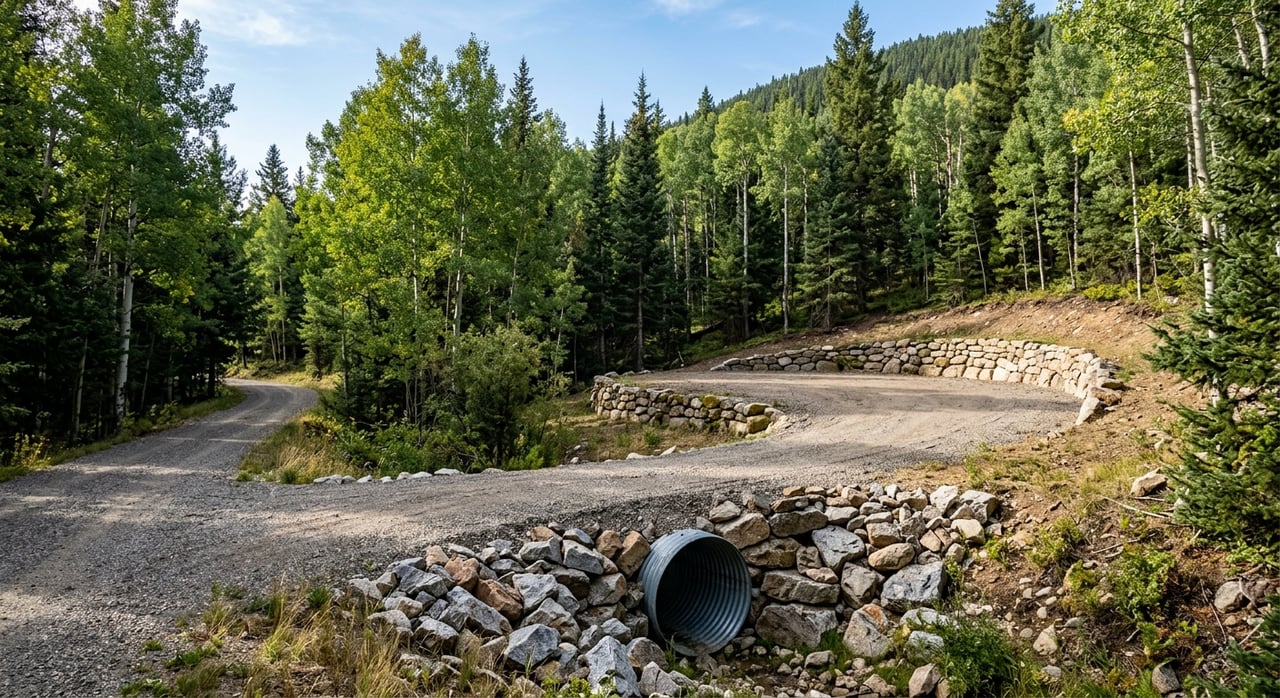
Access has its own approval path in Pitkin County. The county states that all new road and driveway construction needs a development permit, subdivision access points must be reviewed and approved, and roads serving three or more addressable structures must be named under the county’s road and driveway standards.
This is one reason legal access and winter maintenance deserve close attention. A parcel may look accessible in summer, but practical year-round use, emergency response, and any private road or gate easements should all be reviewed before closing.
In Old Snowmass, the land itself can shape what is possible just as much as zoning does. Conservation easements, wetlands, riparian setbacks, and floodplain areas can all affect siting and future development.
Conservation easements are common in the Roaring Fork Valley. Aspen Valley Land Trust describes a conservation easement as a recorded, legally binding agreement that permanently limits certain development while allowing anticipated future uses.
Pitkin County also notes that a conservation deed restriction or covenant may permanently restrict future non-agricultural development and subdivision. That does not make a ranch parcel unusable, but it can materially affect what you can build, where you can build it, and whether the property can ever be divided further.
Water-adjacent land can be especially appealing, but it also requires extra review. Pitkin County’s guidance on wetlands and riparian areas says wetlands and riparian corridors are common, minimum stream setbacks apply, and development generally must occur outside the 100-year floodplain, wetlands, riparian areas, and county-mandated stream setbacks.
For ranch buyers, that can affect the placement of a home, barn, arena, driveway, irrigation improvements, or other structures. Walking the land with these constraints in mind can be very helpful before you move into design work.
When you are evaluating land or a ranch in Old Snowmass, these are the questions worth answering early:
In Old Snowmass, a successful purchase is often less about moving quickly and more about asking the right questions in the right order. The best parcel for you is not only beautiful, but also aligned with your intended use, timing, and long-term plans.
That is where experienced local guidance matters. If you are comparing ranch parcels, land tracts, or homesites in Old Snowmass, working with someone who understands the rural side of Pitkin County can help you focus on what is truly workable, not just what looks promising online.
If you are considering land or a ranch in Old Snowmass and want a thoughtful, concierge-level approach to the search, connect with Theo Williams for local insight and clear guidance tailored to your goals.
Stay up to date on the latest real estate trends.

Elevate your real estate experience with Theo Williams. Whether you're buying or selling, Theo's unmatched expertise and personalized service ensure your journey is seamless and rewarding. Contact Theo today to start your real estate adventure.