Snowmass Village New Development Condos Buyer Guide
July 2, 2026
July 2, 2026
Are you looking at Snowmass Village new development and wondering whether the remaining opportunities are worth the premium? You are not alone. In a market where brand-new resort residences are scarce, it helps to understand exactly what you are buying, how the ownership structure works, and where the real trade-offs sit. This guide will help you compare today’s limited new-development options with the broader resale market so you can make a more confident decision. Let’s dive in.
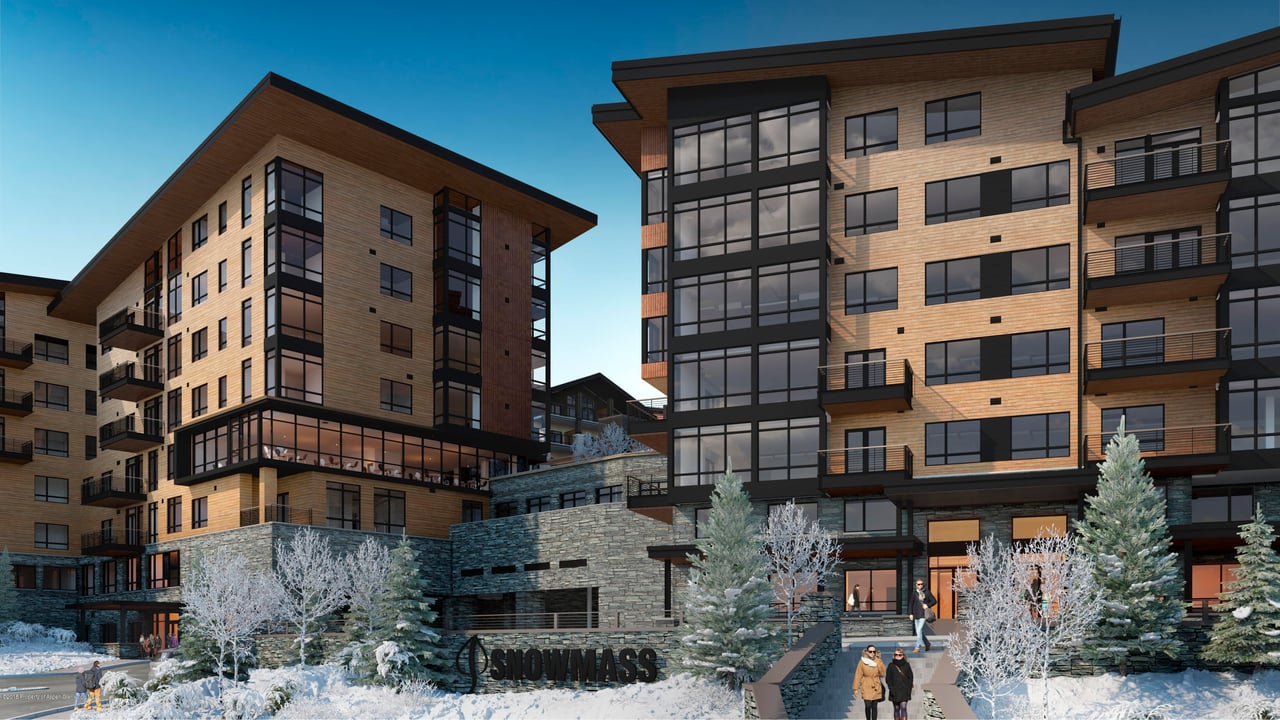
If you are shopping for a newly built residence in Snowmass Village, the first thing to know is that the public pipeline is tight. As of late June 2026, the official Snowmass Base Village residences page presents Stratos as the Grand Finale and lists the earlier Base Village residential offerings as sold out.
That matters because you are not choosing from a wide field of similar projects. In practical terms, most buyers are comparing a small number of remaining resort-style new residences against a much larger pool of resale condos and townhomes.
For broader context, the Aspen Board of REALTORS reported a year-to-date townhouse and condo median sales price of $2.7825 million in Snowmass Village through March 2026, with 16.2 months of supply. That is useful background, but it blends many property types, so it should not be treated as a direct benchmark for ski-in/ski-out new construction.
Right now, Stratos is the most useful example of what newer product in Snowmass Village looks like. According to project materials, it includes 89 residences across two buildings and represents the final two buildings to be constructed under the existing Base Village entitlements.
For buyers, that means Stratos is not just another condo project. It is a good reference for the design choices, amenity expectations, and ownership considerations that define late-stage Base Village product.
One of the most important things to understand is that the homes within Stratos are not all interchangeable. The project includes three distinct residence types, and each one supports a different way of using the property.
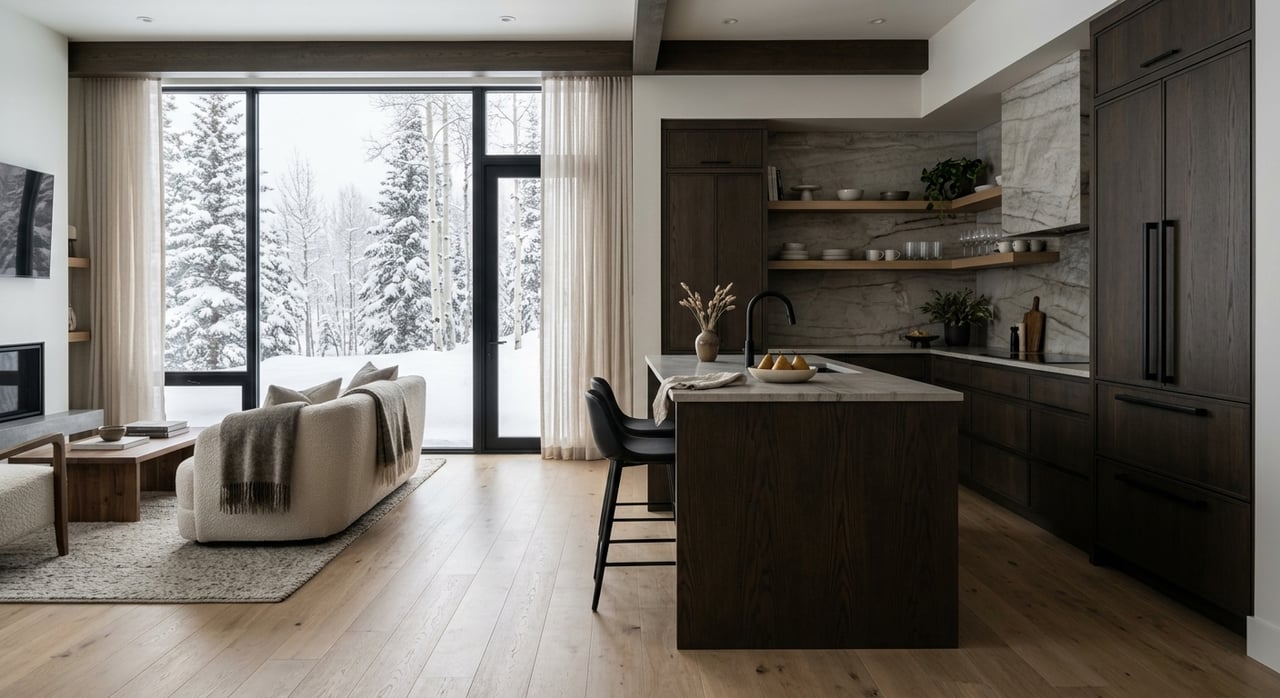
Residences are single-level homes with two-, three-, and four-bedroom layouts ranging from about 1,050 to 1,950 square feet. These homes can have mountain-side or park-side orientations and may include patios, balconies, or an infinity window wall.
Cloudstones are two-story townhome-style residences with four- and five-bedroom floor plans of roughly 2,300 to 2,500 square feet. Project materials describe double-height great rooms, walk-out patios, and private two-car garages.
Sky Cabins sit at the top of the project and are limited penthouse-style homes with four, five, and six bedrooms, ranging from about 2,550 to 5,000 square feet. These residences include rooftop terraces, direct elevator access, and private two-car garages.
If you are deciding between these options, it helps to think less about bedroom count and more about how you want to live in the property. Single-level convenience, townhome-style separation, and penthouse privacy can feel very different in daily use.
Many buyers assume new construction means full customization. In Snowmass Village, that is not always the case.
Stratos residences are sold unfurnished and use two fixed finish packages. Buyers who purchase early enough may be able to choose a palette and optional enhancements, but these homes are still designed as a curated product rather than a blank slate.
That can be a plus if you want a more streamlined process and a polished final result. It can be a drawback if you are hoping to redesign major elements or personalize every detail from day one.
A big part of the appeal in Snowmass Village new development is the building experience itself. In projects like Stratos, you are not just buying the residence. You are also buying into a resort-style operating model with shared spaces, services, and storage solutions.
Project materials describe in-building amenities that include a rooftop Sky Terrace with a spa pool and lounge seating, a Sky Lounge, a Ski Lounge with ski lockers and ski storage, and the Stow & Go program for lockable storage cabinets plus building-wide ski, bike, and owner storage.
Owners also have access to shared Base Village amenities such as the 25-yard saltwater Village Pool, a spa pool, SBVfit fitness center, the pedestrian plaza, Linear Park, The Collective, the ice rink, and the events lawn. If your Snowmass lifestyle centers on convenience and time on the mountain, these features can materially shape the ownership experience.
In Snowmass Village, access often drives value just as much as square footage. That is especially true for second-home buyers and rental-oriented owners who want easy movement between the residence, lifts, and the village core.
Stratos materials state that the project offers ski-in/ski-out access to Snowmass Resort and walkability to Base Village. The Ski Lounge reportedly opens to the Bridges trail just below the start of the Elk Camp Gondola, with nearby access tied to the Village Express Lift, Assay Hill Lift, Elk Camp Gondola, and Skittles Gondola.
For many buyers, this kind of access is a primary reason to pay more for new development. It can simplify your day, support guest appeal, and reduce the friction that comes with hauling gear, coordinating parking, or navigating less direct routes to the slopes.
When comparing new development with resale, sticker price is only part of the equation. Carrying costs can change the real picture.
The Stratos FAQ estimates average HOA dues at about $24 per square foot annually. That estimate is project-specific and includes the master association, access to the Village Pool and SBVfit, common-area maintenance, and core services.
That number should be verified for the exact residence you are considering. Even within the same project, buyers should confirm what is included, how reserves are structured, and whether any special assessments or future cost changes could affect long-term ownership.
If rental flexibility matters to you, this is one of the most important parts of your due diligence. In Snowmass Village, the answer is never just “yes” or “no.” It depends on both town rules and the property’s governing documents.
The town defines a short-term rental as a dwelling unit rented for fewer than 30 consecutive days. Snowmass Village requires both a business license and a short-term rental permit, and the revised regulations effective December 30, 2025 set the permit fee at $400 with annual expiration on April 30.
The town also states that the total lodging and sales tax rate is 12.8 percent, and permit numbers must be displayed on listings. Owners also need to verify HOA approval, follow the more restrictive set of rules, maintain a designated local owner representative available 24/7/365 with a 60-minute response time, and file monthly sales and lodging tax forms.
According to its FAQ, Stratos allows owners to rent their residence as much or as little as they want, whether short-term or long-term, subject to HOA declaration requirements and any future restrictions. Owners are not required to use Snowmass Mountain Lodging, though many do because it offers rental management and homecare services.
Those services include concierge support, bell service, housekeeping, maintenance, grocery stocking, regular home inspections, capital project management, move-in assistance, delivery assistance, and full-service rental management. If you want turnkey ownership with operational support, that can be a meaningful advantage.
Snowmass Club is a good example of why ownership structure must come first in your analysis. Its residences are described as a flexible fractional ownership program with full club amenities and limited seasonal rental opportunities.
That is very different from a standard whole-ownership condo purchase. Snowmass Club also states that owners may not rent through third parties such as Airbnb or VRBO, which highlights how “resort-style” does not always mean open-market nightly rental flexibility.
For many buyers, the right answer is not automatically new development. It depends on how you value design, convenience, rental use, and day-one condition.
New development in Snowmass Village tends to offer newer finishes, direct ski access, stronger parking and storage solutions, and amenity-rich common areas. In exchange, you will often pay a premium and accept the developer’s floor plan, orientation, finish package, and operating structure.
Resale condos and townhomes can offer immediate occupancy, potentially more negotiable pricing, and in some cases a proven rental history or a more established HOA. The trade-off is that older product may need renovation and may not match newer buildings on layout efficiency, ski storage, parking, or amenity depth.
The most successful buyers in Snowmass Village usually get very clear on a few details before writing an offer. Here are the questions worth answering early.
These may sound like small details, but in Snowmass Village they often shape the real ownership experience more than list price alone.
Because public new-development inventory is so limited, your best strategy is usually to compare new-build opportunities against resale options with the same level of rigor. Look beyond finishes and marketing language and focus on ownership structure, rental flexibility, carrying costs, storage, parking, and access.
That is where the real differences show up. In a market like Snowmass Village, a residence that looks similar on paper can deliver a very different lifestyle once you factor in how the building operates and how you plan to use it.
If you want clear guidance on Snowmass Village new development, resale alternatives, or how a specific residence fits your goals, Theo Williams offers a polished, concierge-level approach grounded in Aspen and Snowmass market expertise.
Stay up to date on the latest real estate trends.
Elevate your real estate experience with Theo Williams. Whether you're buying or selling, Theo's unmatched expertise and personalized service ensure your journey is seamless and rewarding. Contact Theo today to start your real estate adventure.