What an Old Snowmass Land Listing Doesn't Tell You About Development Rights
August 27, 2026
August 27, 2026
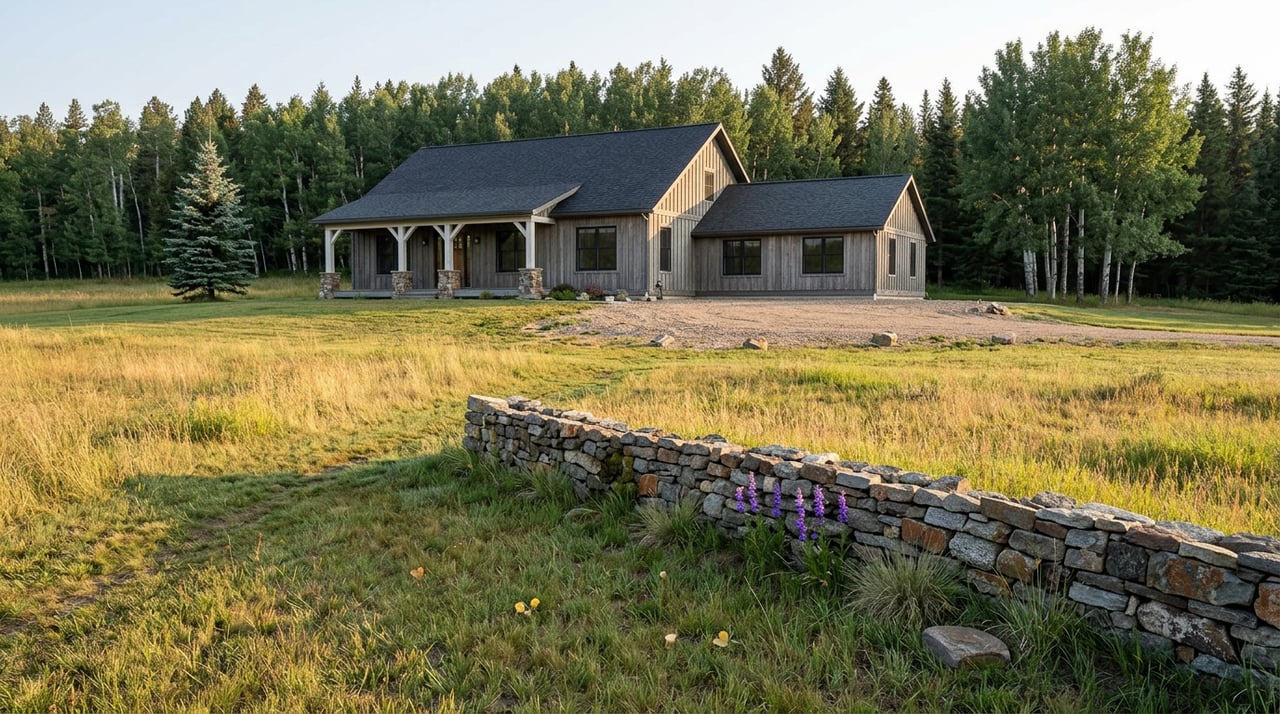
Stand on a forty-acre parcel off Snowmass Creek Road with an agent, and the pitch writes itself. Mount Sopris fills the western sky. The creek runs somewhere below the ridge. The listing says "development potential" in the kind of type that makes you picture a great room with a wall of glass facing the Elk Range.
What the listing sheet does not say, in most cases, is how much house that parcel is actually entitled to build. In unincorporated Pitkin County, that number has almost nothing to do with the acreage and almost everything to do with a separate, tradeable asset called a Transferable Development Right, or TDR. And the price of that asset has moved so far in four years that a parcel priced the same today as it was in 2022 may now cost a buyer several hundred thousand dollars less to actually build on, or more, depending on which way the market breaks next.
That is the number worth understanding before you write an offer on land in Old Snowmass. The acreage is the backdrop. The TDR is the price of admission.
Pitkin County created its Rural/Remote zoning in 1994 to keep large-scale construction out of the backcountry. Land inside that zone, which covers a substantial share of the large parcels around Old Snowmass, is capped at a footprint closer to a cabin than a compound unless the owner brings in additional entitlement from elsewhere.
That additional entitlement is the TDR. The county's own program summary lays out the mechanics plainly: a "Sending Site," typically backcountry acreage in the Rural/Remote or Transitional Residential zones, permanently gives up its development right in exchange for a certificate. That certificate can then be sold and applied to a "Receiver Site," a different parcel approved to absorb the extra square footage. Each TDR currently carries 2,500 square feet of floor area, and a Rural/Remote parcel generally generates one TDR for every 35 acres.
This is why so many Old Snowmass listings carry language that sounds more like a permitting document than a marketing brochure. Parcels advertised with an approved "activity envelope" or a completed "site plan approval" have already done the entitlement work. Parcels that only mention acreage and views usually have not, which means the buyer inherits that process, along with its cost and its timeline.
Here is where it gets interesting for anyone comparing a land purchase now against what the same parcel might have cost to build on two or three years ago.
County TDR prices are not fixed by the government. They trade on a private, thin market between landowners who hold them and builders who need them, and that market has swung harder than almost anything else in the Aspen area's real estate picture. Prices sat in the $225,000 to $240,000 range through much of the 2010s. By 2021, a heated building market pushed the top recorded sale to $1.8 million. Trading kept climbing into 2022, when the market reportedly peaked near $2.5 million per TDR.
Then it reversed. Recent County TDR sales have landed in the $625,000 to $825,000 range, with market watchers expecting prices to settle closer to $650,000 to $700,000 in 2026. That is a decline of roughly 70 percent from the 2022 peak, on the exact asset that determines whether a piece of Old Snowmass land can support anything larger than a modest cabin.
Meanwhile, a related but separate market has moved the opposite direction. City of Aspen historic preservation TDRs, generated when an owner protects a landmarked property in town rather than backcountry acreage, have continued to appreciate, with recent sales near $725,000, up from the $600,000 to $675,000 range in 2024. Two entitlement markets, created by the same county government for related purposes, are currently pricing in opposite directions. That divergence alone tells a buyer something a comps sheet cannot: the value of a development right depends entirely on where it came from and where it is going, not on some single, stable market rate.
The TDR price collapse is not happening in a vacuum. Pitkin County has been actively reworking its growth management rules, and those changes are already shaping what buyers and sellers expect the program to be worth going forward.
The county reduced the maximum house size inside the Aspen Urban Growth Boundary from 15,000 square feet down to 9,250 square feet in November 2023. Further changes are moving through the process for 2027, including a drop in the maximum house size outside the Urban Growth Boundary to 8,750 square feet and a reduction in basement exclusions that would require even basement square footage to draw on a TDR. A tiered approval process is also planned, adding cost and time to any home proposed above 3,250 square feet.
At the same time, the county has introduced a new category, sometimes called a Residential TDR, aimed at longtime homeowners. A resident of 25 years or more can deed-restrict their existing home against future expansion in exchange for the right to generate and sell TDRs as a standalone financial asset, without giving up the house itself. That is new supply entering a market that had been getting tighter every year, and new supply arriving just as the county signals it may tighten the buildable footprint further helps explain why prices softened rather than kept climbing.
None of this makes the TDR program cheap. It makes it a moving target, and a buyer evaluating raw acreage in Old Snowmass right now is pricing against rules that are still being written.
The clustering pattern common to large Old Snowmass holdings exists because of exactly this system. Lazy O Ranch, a private, gated property spanning roughly 1,500 acres, houses 22 individual homesites sharing that acreage rather than each owner holding a separate, fully entitled parcel. Twin Creeks Ranch, set at the confluence of Capitol and Snowmass creeks about 20 minutes from Aspen's core, follows a similar compound logic. These arrangements let owners concentrate development rights onto a smaller footprint while leaving the surrounding acreage undeveloped, which is precisely the outcome the TDR program was designed to produce.
When a listing in this part of the valley mentions an approved activity envelope or a completed site plan, as several recent Old Snowmass offerings have, it is signaling that someone already navigated this process. That work has value. It also has a cost basis that should factor directly into any offer, separate from the price of the dirt itself.
Old Snowmass sells so few homes in a given year that its own data can mislead a buyer who reads it the way they would read a suburban market report. Through March 2026, the Aspen Board of Realtors recorded a year-to-date single-family median sales price of $3.61 million and an average of $7.62 million, based on just three closed sales. One estate transaction can swing that average by millions of dollars, and a median built on three data points tells you almost nothing about what a typical buyer should expect to pay next month.
That thinness is exactly why the TDR conversation matters more here than in a higher-volume market. When comparable sales are scarce, the entitlement attached to a parcel, or the entitlement a buyer will need to acquire separately, becomes one of the few reliable ways to underwrite what a property is actually worth to build on.
A few questions are worth answering directly, ideally before a purchase contract is drafted rather than during due diligence:
What exactly is a TDR, in plain terms? It is a certificate that separates the right to build square footage from the land it originated on. A backcountry parcel gives up that right permanently, and a different, approved parcel can use it to build beyond the base cap.
Does every large parcel in Old Snowmass need one? Not every parcel. Some already have entitlement built in through prior approvals, and some property owners hold TDRs as part of a larger estate or ranch offering. But a meaningful share of the raw acreage in Old Snowmass sits in Rural/Remote zoning, where the base allowance is modest and a TDR is the standard path to a larger home.
Is Pitkin County getting rid of the TDR program? County officials have discussed limiting new TDR issuance over the years, and a 2027 land use code update is expected to reduce house-size caps and add a new Residential TDR category. The program itself has continued, and a county advisory committee has recommended keeping it in some form. The rules attached to it, however, are actively changing, which is part of why prices for existing TDRs have moved so much.
Land in Old Snowmass rewards a buyer who reads past the acreage number. The right question is not how many acres come with the parcel. It is how much of that acreage's development potential is already accounted for, and what it would cost, in dollars and in county process, to unlock the rest.
If you are evaluating a specific parcel, ranch, or estate offering in Old Snowmass and want a clear read on its entitlement position before you make an offer, Theo Williams can walk the property with you and the county records side by side. Start Your Aspen Search today.
Stay up to date on the latest real estate trends.
Elevate your real estate experience with Theo Williams. Whether you're buying or selling, Theo's unmatched expertise and personalized service ensure your journey is seamless and rewarding. Contact Theo today to start your real estate adventure.